
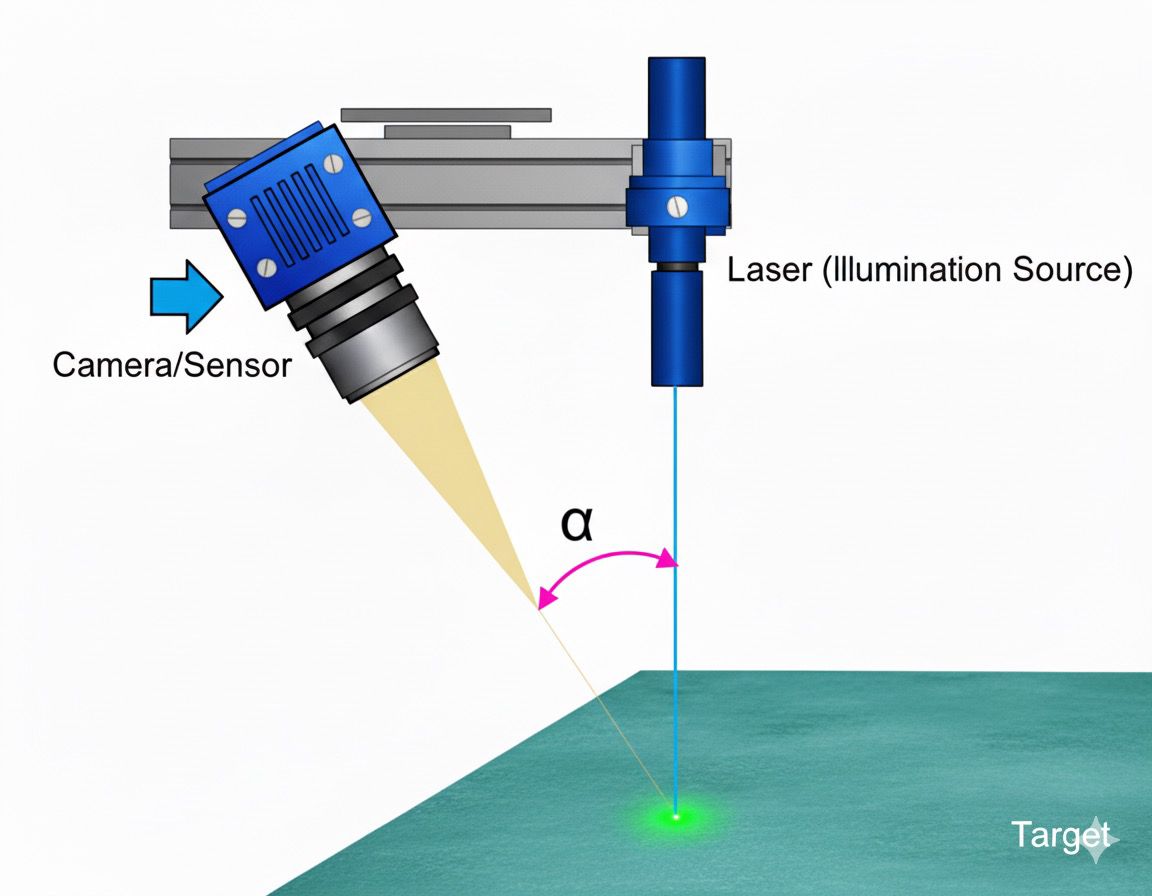
A laser triangulation sensor is a highly precise measuring instrument that uses laser light to capture the geometry, dimensions, distances, and surfaces of objects. In industrial metrology, it is used wherever accurate, contactless, and fast results are required. Due to its versatility, the laser triangulation sensor has become an indispensable tool for quality assurance and process optimization in a wide range of industries.
The operating principle of a laser triangulation sensor is based on a simple yet highly effective optical method. A laser beam is projected onto the surface of the object being measured, and the reflected light is captured by a camera. The exact distance can be calculated from the position of the reflected point on the camera sensor. This generates precise geometric information about the object.
Unlike tactile methods, the measurement is completely contactless, which protects delicate materials and enables measurements in extreme environments. The triangulation method is therefore ideally suited for applications where high speeds, hot surfaces, or hard-to-reach areas must be measured reliably.
Compared to other optical measurement methods, laser triangulation offers particularly high accuracy and flexibility. Methods such as laser interferometry also provide precise results, but are often more sensitive to environmental influences and less versatile. Tactile measuring systems require physical contact and are therefore significantly slower and more susceptible to disturbances.
The laser triangulation sensor combines high speed with robust precision. In particular for inline applications, where processes must be continuously monitored, it offers a reliable solution. This leads to stable production processes, reduced scrap rates, and measurable increases in efficiency.
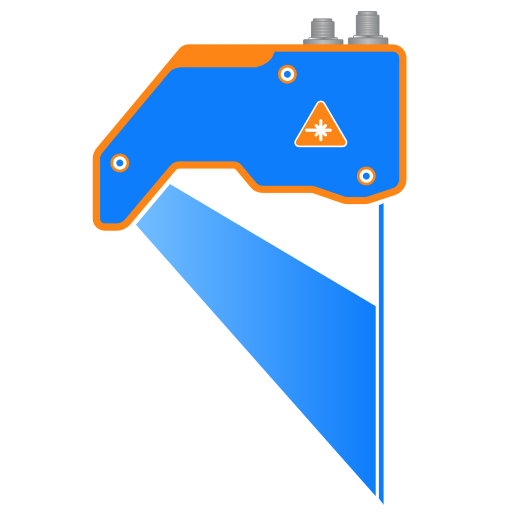
Laser triangulation forms the basis for numerous industrial measurement and inspection tasks. By accurately capturing height profiles, surface structures, and distances, production processes can be monitored and optimized. Depending on the application, the technology is used in various configurations and delivers reliable results in both simple distance measurements and complex 3D measurements.
A laser triangulation sensor essentially consists of three main components: a laser source, an optical system, and a camera. The laser projects a point or line onto the object. The optical system maps the reflected light onto the camera chip. Intelligent evaluation algorithms then convert the image data into precise measurement values.
The modular design offered by QuellTech allows sensors to be flexibly adapted to specific requirements. Different laser wavelengths or optical configurations can be selected to achieve reliable results even on challenging surfaces such as shiny metals or transparent materials.
The accuracy of a laser triangulation sensor depends on several factors, including the quality of the optical components, the stability of the laser, and the performance of the evaluation software. External conditions such as temperature, dust, or ambient light may also influence results, making robust designs essential for industrial environments.
Thanks to special calibration and filtering methods, modern sensors provide precise values even in harsh environments, ensuring consistent process reliability.
Laser triangulation sensors can be used in both 2D and 3D measurement systems. While 2D systems capture, for example, distances or height profiles, 3D systems enable a complete three-dimensional reconstruction of objects. This selection opens up a broad spectrum of applications—from surface inspection and volume determination to complex component measurement.
Especially in modern industrial production, where quality and efficiency go hand in hand, the ability to measure in three dimensions is of decisive importance. It enables seamless inspection of even the most complex components and creates the basis for automated processes in manufacturing.

Inline measurement blue laser
Laser triangulation sensors are universally applicable and are used in a wide variety of industries. They have become established as a standard particularly in industrial quality assurance, as they enable non-contact, fast, and precise inspection of components and processes. Thanks to their robustness and adaptability, they are suitable for both simple measurement tasks and highly specialized applications.
In modern production lines, inline metrology plays a central role. Here, laser triangulation sensors enable continuous inspection of components without interrupting the manufacturing process. Deviations can thus be detected and corrected immediately, reducing scrap and rework.
With their high measurement speed, the sensors are also suitable for high-throughput processes in which conventional inspection methods – such as the fringe-projection method – reach their limits. Companies benefit from consistently high product quality and stable production flow.
Laser triangulation sensors are particularly well suited for inspecting optically challenging surfaces. Shiny, reflective, or very dark materials pose major problems for many measurement methods – but not for laser triangulation. By selecting appropriate laser wavelengths and using sophisticated evaluation techniques, even the most difficult surfaces can be captured reliably.
This opens up new possibilities in industries with demanding production environments or in metal processing, where surface quality is crucial for the function and service life of components. The technology thus directly contributes to ensuring the highest quality standards.
Whether extreme temperatures, heavy dust loads, humidity, or ambient light – laser triangulation sensors are engineered for use under difficult environmental conditions. Their robust design and special protective mechanisms – such as purge air, interference filters, water cooling, and protective windows – ensure that they deliver precise measurement results even in harsh environments.
This makes them an ideal solution for industries such as mining, steel production, or mechanical engineering. Companies can rely on the sensors to operate dependably even under the toughest conditions, thereby ensuring stable process monitoring.
QuellTech GmbH is among the technology leaders in 3D laser measurement systems. With our specialization in challenging measurement tasks, we offer customized solutions that go far beyond standard applications. Thanks to our modular concept, in addition to our standard laser-scanner portfolio, we can adapt laser triangulation sensors flexibly to the individual requirements of our customers – be it at extreme temperatures, high speeds, or in confined installation spaces. QuellTech laser sensors feature a small form factor, and accessory products such as cooling modules and protective windows for the laser head are available.
Our modular sensor concept makes it possible to select and coordinate components in a targeted manner. For example, different measurement widths from a few millimeters to several meters can be realized. Adapting to optically demanding surfaces or harsh environments is also straightforward.
Customers benefit from a maximum degree of flexibility, since the sensors – with their small form factors – can be integrated into existing systems or provided as part of a complete turnkey solution. This adaptability makes QuellTech sensors a future-proof investment.
In addition to sensor hardware, we offer our customers comprehensive end-to-end solutions. These include not only the appropriate sensor technology but also the associated software and integration into existing production processes. Thanks to our turnkey approach, projects can be implemented efficiently worldwide.
By tightly coupling hardware and software, we significantly shorten implementation times. This enables our customers to start series production more quickly and gives them a decisive competitive advantage in time-to-market.

QuellTech laser triangulation sensors stand for precision, reliability, and maximum adaptability. Our solutions are designed to deliver precise results even under the most demanding conditions, thereby playing a central role in quality assurance and process control.
Our sensors are designed for use at high temperatures up to approx. 1200 °C, in dusty environments, or even underwater. Even where other measurement methods fail, QuellTech lasers provide reliable and reproducible results.
This gives our customers the ability to ensure seamless inspection even in sensitive or hazardous production environments. The technology plays a decisive role in avoiding production downtime and maintaining consistently high quality.
Whether tiny structures in the micrometer range or large components several meters wide: our laser triangulation sensors cover a broad spectrum. They are also optimized for high process speeds, allowing even dynamic operations to be monitored precisely.
Thanks to this flexibility, the sensors can be used across a wide range of industries—from automotive and metal processing to mechanical engineering. Companies thus receive a solution that fits their exact requirements.
With our holistic approach, we ensure that projects can be realized more quickly. The combination of customized hardware and intelligent software not only shortens implementation time but also reduces integration effort.
For our customers this means: faster market launch, lower costs, and reliable quality control from the very first day of production. In this way, QuellTech’s laser triangulation sensor becomes a key building block for long-term economic success.
Q4 Laser Scanner Family:
Small form factor, low weight, many housing variants, high laser powers in blue, red and green, very high robustness against environmental influences.
Q5 Laser Scanner Family:
Medium form factor, high resolution, very high speed, laser measurement widths up to 800 mm.
Q6 Laser Scanner Family:
Medium form factor, very high resolution, very high speed, many housing options, measuring widths up to 1500 mm.
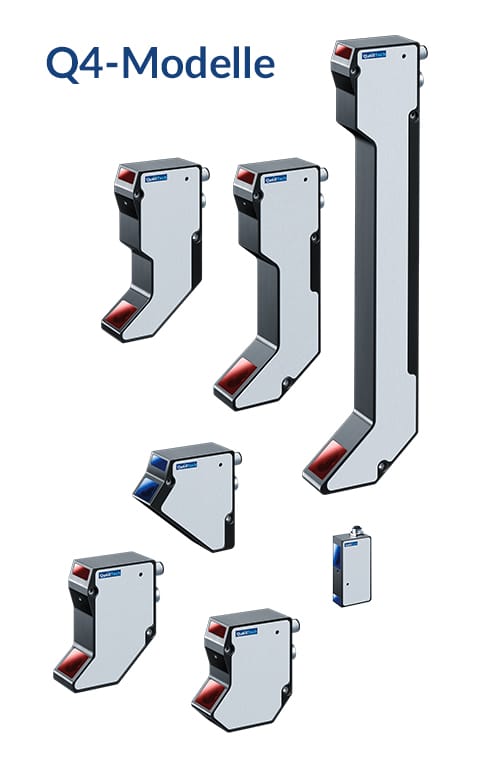
QuellTech Q4 laser scanner product family for simple applications, very robust against ambient light.
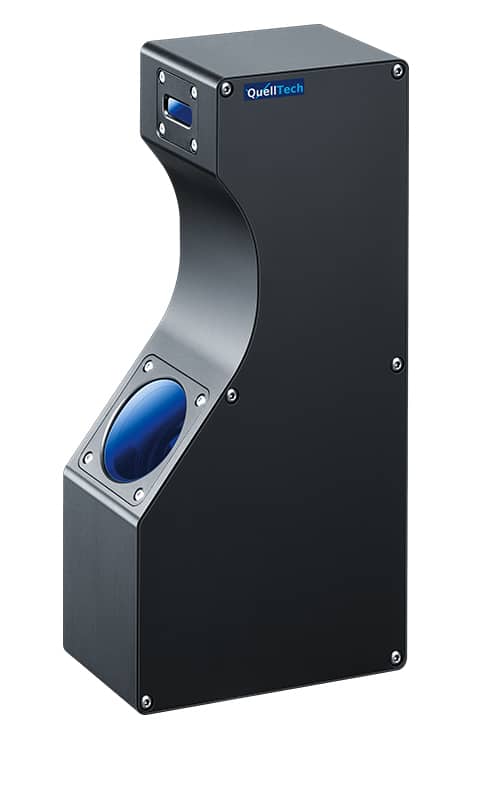
Q6-D laser scanner product family for demanding, fast, and high-resolution measurement technology.
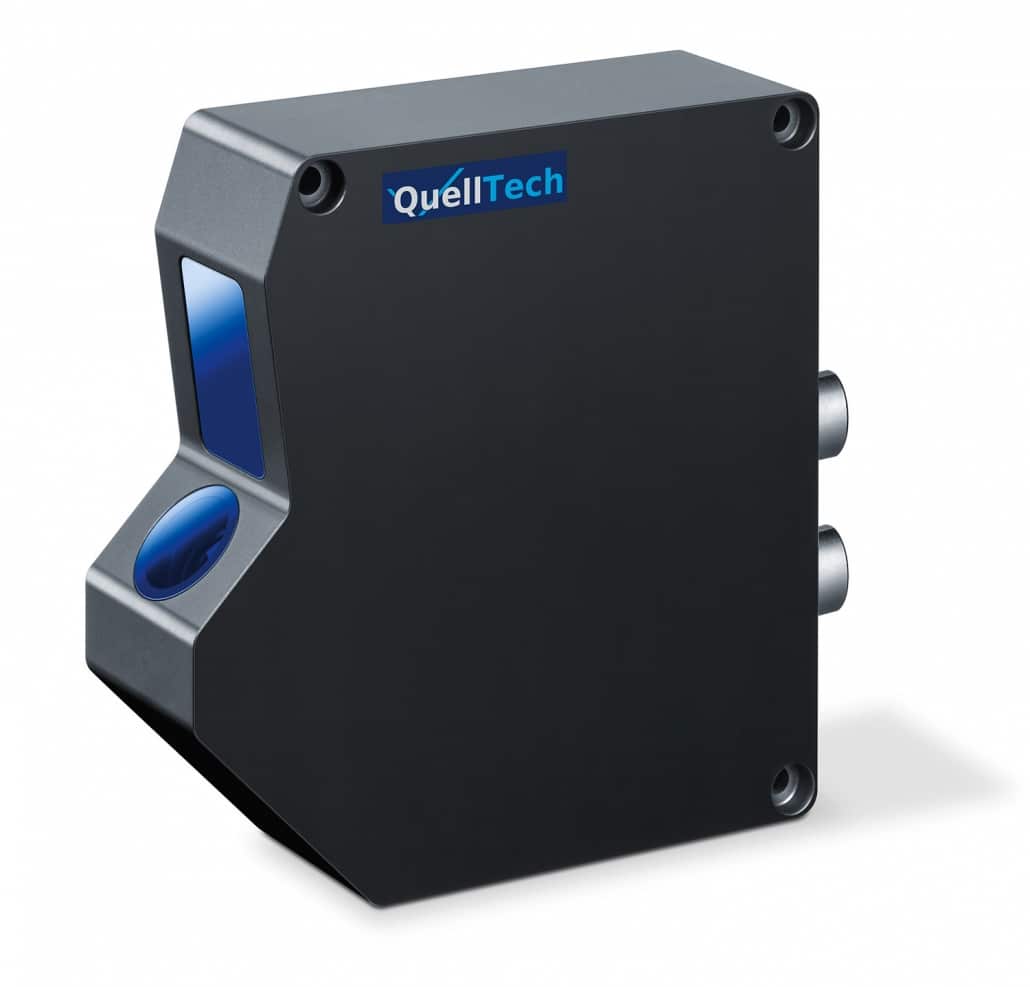
Q5-D laser scanner product family is the reliable performer in the midfield of optical applications.
We are happy to help you with that!

Stefan Ringwald
Technical Contact
If you have any questions about laser triangulation sensors or would like a consultation from QuellTech on this subject, we will be happy to help.
We would like to help you to precisely evaluate your specific measurement task. Through an initial free test measurement of your application, we can give you an early assessment of the feasibility.
There is always potential for improvement, we will help you with that. Contact us for more information or to make an appointment for a consultation.
Would you like to assess the feasibility of your measurement task as early as possible? Contact us and take advantage of our free initial sample measurement.
By submitting the contact form, you agree that your data will be used to process your request (further information and instructions on withdrawal can be found in the privacy policy).
Your technically competent contact, Stefan Ringwald, will be happy to help you.
Our aim is to fully understand your specific technical requirements for your current measurement task.
Thanks to many years of experience with complex tasks in the field of 3D laser measurement, you will receive well-founded solution proposals from us.
Hinweis für Deutsche Unternehmen:
Für Investitionen in Ausrüstungen gilt seit Juli 2025 eine degressive Sonderabschreibung von bis zu 30% p.a. – befristet bis Ende 2027.
Je früher die Anschaffung erfolgt, desto länger kann dieser Vorteil genutzt werden.
(Dies ist keine Steuerberatung, bitte wenden Sie sich für Details an Ihre Steuerberatung.)
You are currently viewing a placeholder content from Vimeo. To access the actual content, click the button below. Please note that doing so will share data with third-party providers.
More InformationYou are currently viewing a placeholder content from YouTube. To access the actual content, click the button below. Please note that doing so will share data with third-party providers.
More InformationYou need to load content from reCAPTCHA to submit the form. Please note that doing so will share data with third-party providers.
More Information